
🍽️ Introduction to Gastric Secretion
Gastric secretion is the process by which the stomach produces substances necessary for digestion, including hydrochloric acid (H⁺), enzymes, mucus, and intrinsic factor. These secretions help break down food, activate digestive enzymes, and protect the gastrointestinal tract from harmful microorganisms. Gastric secretion is carefully regulated through neural, hormonal, and paracrine pathways to maintain proper digestive function while preventing damage to the stomach lining.
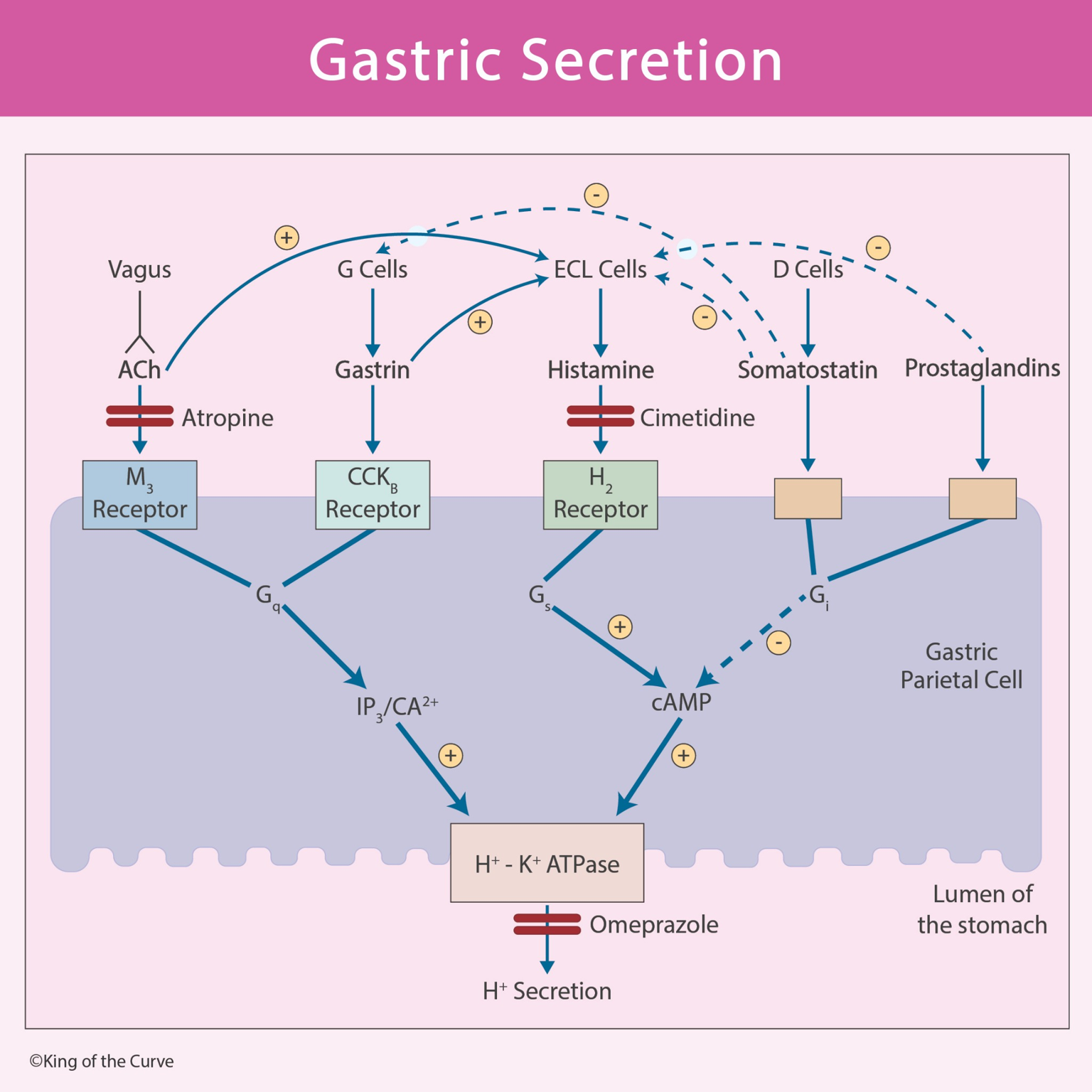
🧠 Neural Regulation Through the Vagus Nerve
The vagus nerve plays a major role in stimulating gastric acid secretion. It releases acetylcholine (ACh), which binds to M₃ receptors on gastric parietal cells. This interaction activates intracellular signaling pathways involving Gq proteins and increased calcium levels, ultimately promoting acid production. Vagal stimulation also indirectly increases acid secretion by activating G cells and enterochromaffin-like (ECL) cells within the stomach.
🧪 Role of Gastrin in Acid Secretion
G cells located in the stomach release the hormone gastrin in response to food intake and vagal stimulation. Gastrin binds to CCKB receptors on parietal cells and ECL cells, increasing gastric acid production. It enhances both direct acid secretion and histamine release, making it one of the most important hormonal regulators of digestion. Elevated gastrin levels can significantly increase stomach acidity.
⚡ Histamine and ECL Cell Activation
Enterochromaffin-like (ECL) cells release histamine, which strongly stimulates acid secretion. Histamine binds to H₂ receptors on gastric parietal cells and activates Gs proteins, leading to increased cyclic AMP (cAMP) production. This signaling pathway amplifies the activity of the proton pump responsible for secreting hydrogen ions into the stomach lumen. Histamine works synergistically with acetylcholine and gastrin to maximize acid production.
📊 Key Components of Gastric Secretion
| Component | Source | Primary Action |
|---|---|---|
| Acetylcholine (ACh) | Vagus nerve | Stimulates M₃ receptors and acid secretion |
| Gastrin | G Cells | Stimulates parietal and ECL cells |
| Histamine | ECL Cells | Activates H₂ receptors and increases cAMP |
| Somatostatin | D Cells | Inhibits gastrin and histamine release |
| Prostaglandins | Gastric mucosa | Reduce acid secretion and protect mucosa |
| H⁺/K⁺ ATPase | Parietal cells | Final pathway for acid secretion |
🛡️ Inhibitory Mechanisms and Protection
The stomach contains several protective mechanisms to prevent excessive acid damage. D cells release somatostatin, which inhibits G cells, ECL cells, and parietal cells. This reduces gastrin release and suppresses acid production. Prostaglandins also help protect the gastric mucosa by decreasing acid secretion while increasing mucus and bicarbonate production. These inhibitory pathways maintain balance within the digestive system.
💊 Pharmacological Control of Gastric Acid
Many medications target gastric secretion pathways to treat acid-related disorders. Atropine blocks muscarinic receptors and reduces acetylcholine-mediated stimulation. H₂ receptor blockers such as cimetidine decrease histamine-induced acid secretion. Proton pump inhibitors like omeprazole directly inhibit the H⁺/K⁺ ATPase pump, making them highly effective treatments for peptic ulcers, GERD, and gastritis. These drugs are widely used in clinical medicine.
🔬 Clinical Importance of Gastric Secretion
Proper regulation of gastric secretion is essential for healthy digestion and gastrointestinal function. Excessive acid secretion can contribute to peptic ulcers, acid reflux disease, and gastric inflammation, while reduced secretion may impair digestion and nutrient absorption. Understanding the mechanisms controlling gastric secretion helps healthcare professionals diagnose and manage digestive disorders more effectively.
✅ Summary of Gastric Secretion Pathways
Gastric secretion involves a complex interaction between neural, hormonal, and paracrine signals. Acetylcholine, gastrin, and histamine stimulate acid production, while somatostatin and prostaglandins provide inhibitory control. The H⁺/K⁺ ATPase proton pump serves as the final common pathway for acid secretion and is a major pharmacological target. Maintaining balance between stimulation and inhibition is essential for efficient digestion and protection of the stomach lining.

Frequently Asked Questions (FAQs)
-
Aim for 4-6 focused hours, ensuring you incorporate breaks to avoid burnout.
-
Practice mindfulness techniques, take practice exams under realistic conditions, and maintain a balanced lifestyle.
-
Set short-term goals, seek support from mentors, and reward yourself for small achievements.
-
Regular exercise improves focus, reduces stress, and enhances overall mental clarity.
-
KOTC offers personalized learning tools, gamification features, and adaptive question banks to help students stay on track without burnout.