
🧠 Factors Contributing to Psychological Disorders
Psychological disorders develop through a combination of biological, social-cultural, and psychological influences. Understanding these factors helps in early diagnosis, prevention, and effective treatment.
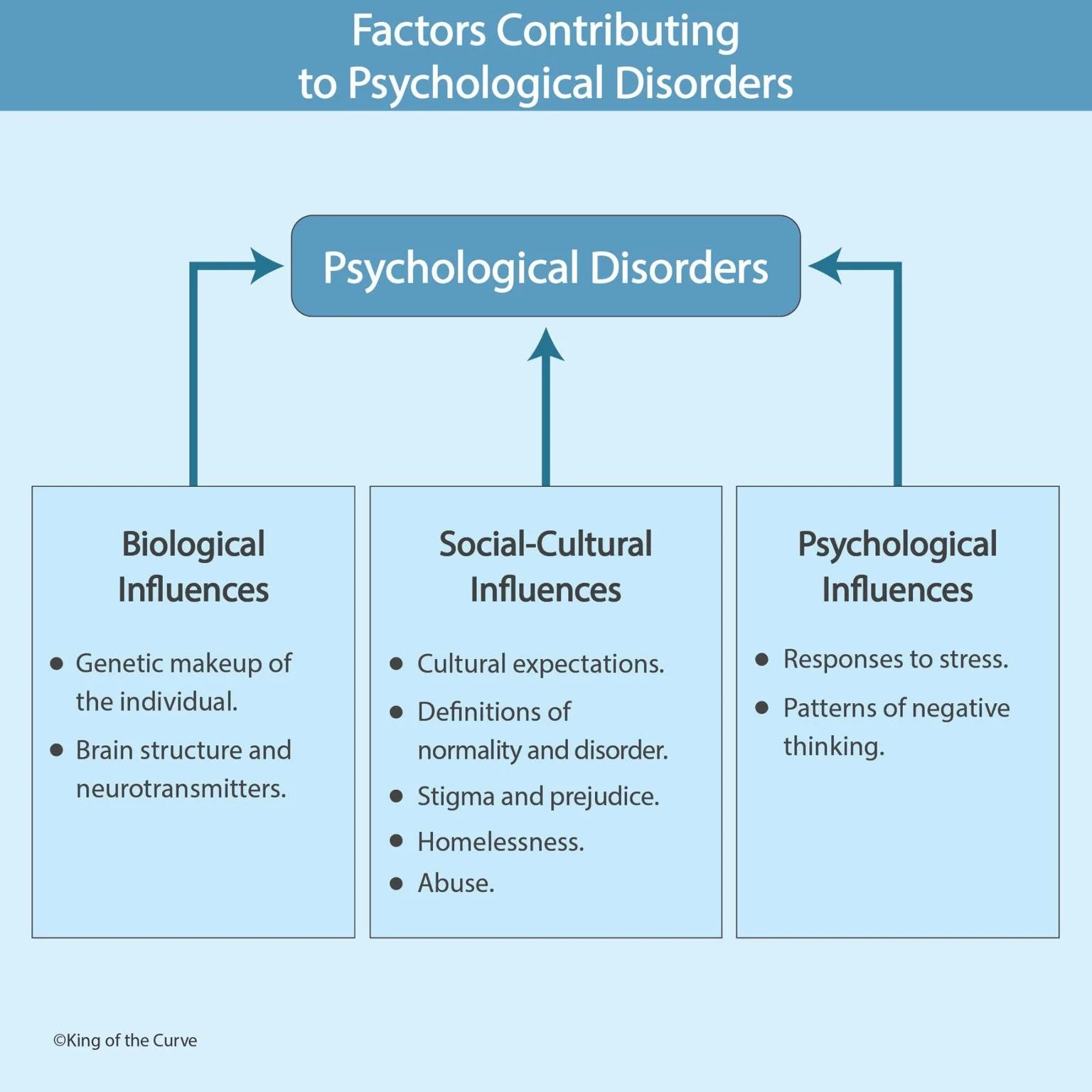
📊 Overview Table
| 🧩 Factor Type | 🔍 Key Elements | 💡 Examples |
|---|---|---|
| 🧬 Biological Influences | Genetics, brain structure, neurotransmitters | Depression, schizophrenia risk |
| 🌍 Social-Cultural Influences | Culture, stigma, environment, trauma | Abuse, homelessness, societal pressure |
| 🧠 Psychological Influences | Thinking patterns, stress response | Anxiety, negative thinking |
🧬 Biological Influences
Biological factors are physical processes within the body that affect mental health.
🔹 Key Points:
🧬 Genetic makeup – inherited risk factors
🧠 Brain structure – abnormalities can affect behavior
⚡ Neurotransmitters – chemical imbalances impact mood
💡 Example:
A family history of depression increases the likelihood of developing similar conditions.
🌍 Social-Cultural Influences
These factors involve the environment and societal context in which a person lives.
🔹 Key Points:
🌐 Cultural expectations – shape behavior norms
⚖️ Definitions of disorder – vary across cultures
🚫 Stigma and prejudice – limit help-seeking
🏚️ Homelessness & poverty – increase stress
⚠️ Abuse and trauma – major risk factors
💡 Example:
Chronic stress due to discrimination may lead to anxiety or depression.
🧠 Psychological Influences
Psychological factors relate to internal mental processes.
🔹 Key Points:
😰 Responses to stress – coping ability matters
🔄 Negative thinking patterns – distort perception
💡 Example:
Persistent negative thinking can contribute to depression and anxiety disorders.
🔗 The Biopsychosocial Model
The biopsychosocial model explains how all three factors interact.
✔️ Key Concepts:
🧩 Multiple causes contribute to disorders
🔄 Factors interact over time
💊 Treatment often requires combined approaches
🎯 Why This Matters
Understanding these influences helps:
💬 Reduce stigma
🩺 Improve treatment strategies
⏱️ Encourage early intervention
🤝 Promote holistic mental health care
📝 Final Thoughts
Psychological disorders are not caused by a single factor. Instead, they arise from a complex interaction between biological, social-cultural, and psychological influences. A comprehensive understanding leads to better care and improved outcomes.

Frequently Asked Questions (FAQs)
-
Aim for 4-6 focused hours, ensuring you incorporate breaks to avoid burnout.
-
Practice mindfulness techniques, take practice exams under realistic conditions, and maintain a balanced lifestyle.
-
Set short-term goals, seek support from mentors, and reward yourself for small achievements.
-
Regular exercise improves focus, reduces stress, and enhances overall mental clarity.
-
KOTC offers personalized learning tools, gamification features, and adaptive question banks to help students stay on track without burnout.