
🧠 Factors Affecting GFR in the Glomerulus
Glomerular filtration rate (GFR) is one of the most important indicators of kidney function. It reflects how effectively the kidneys filter blood and remove waste products. Understanding the factors that influence GFR is essential for both physiology and clinical medicine.
🔍 Understanding the Basics
The glomerulus is a network of capillaries where filtration occurs. Blood enters through the afferent arteriole and exits via the efferent arteriole.
GFR depends largely on:
Blood flow into the glomerulus
Pressure within glomerular capillaries
Resistance in afferent and efferent arterioles
Any factor that alters these variables will influence GFR.
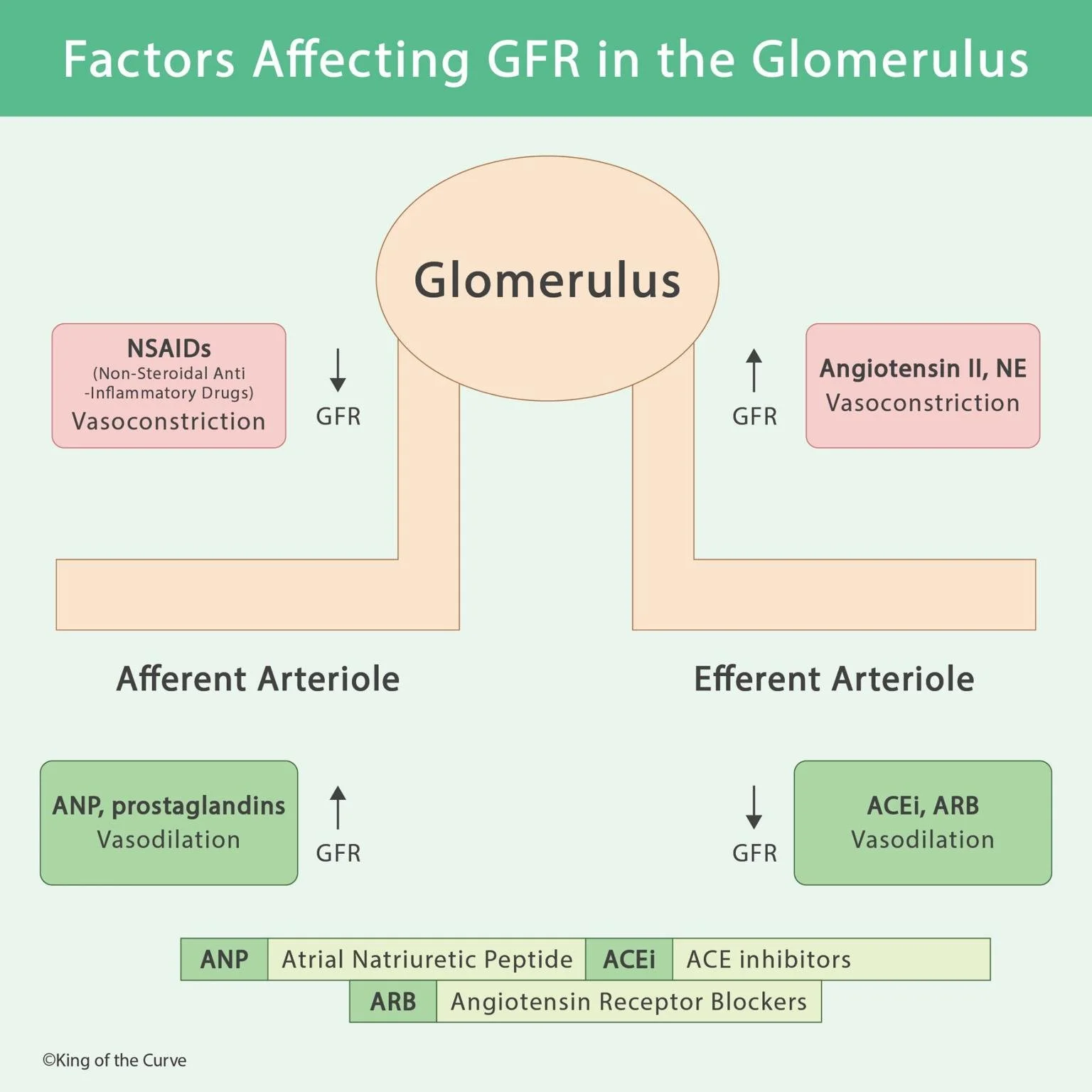
🚪 Afferent Arteriole: Controls Blood Entry
The afferent arteriole regulates how much blood reaches the glomerulus.
🔻 Vasoconstriction → ↓ GFR
Example: NSAIDs (Non-Steroidal Anti-Inflammatory Drugs)
NSAIDs inhibit prostaglandin synthesis
Prostaglandins normally dilate the afferent arteriole
Without them → afferent constriction → reduced blood flow → decreased GFR
💡 Clinical Tip: NSAIDs can precipitate acute kidney injury, especially in patients with low renal perfusion.
🔺 Vasodilation → ↑ GFR
Examples: ANP, Prostaglandins
ANP (Atrial Natriuretic Peptide) increases blood flow into the glomerulus
Prostaglandins help maintain renal perfusion
➡️ Result: Increased glomerular pressure → increased GFR
🚪 Efferent Arteriole: Controls Blood Exit
The efferent arteriole determines how easily blood leaves the glomerulus.
🔺 Vasoconstriction → ↑ GFR
Examples: Angiotensin II, Norepinephrine (NE)
Constriction increases pressure inside the glomerulus
This enhances filtration
➡️ Result: Increased GFR (moderate constriction)
⚠️ Severe constriction may eventually reduce GFR due to decreased renal blood flow.
🔻 Vasodilation → ↓ GFR
Examples: ACE inhibitors (ACEi), ARBs
Block angiotensin II effects
Cause efferent dilation → reduced glomerular pressure
➡️ Result: Decreased GFR
💡 Clinical Tip: ACE inhibitors are useful in CKD but can initially lower GFR.
📊 Key Summary Table
| Location | Factor | Effect on Vessel | Effect on GFR |
|---|---|---|---|
| Afferent arteriole | NSAIDs | Vasoconstriction | ↓ GFR |
| Afferent arteriole | ANP, Prostaglandins | Vasodilation | ↑ GFR |
| Efferent arteriole | Angiotensin II, NE | Vasoconstriction | ↑ GFR |
| Efferent arteriole | ACEi, ARBs | Vasodilation | ↓ GFR |
🧾 Important Abbreviations
ANP – Atrial Natriuretic Peptide
ACEi – ACE inhibitors
ARB – Angiotensin Receptor Blockers
NE – Norepinephrine
🏥 Clinical Relevance
Understanding these mechanisms is crucial in:
Managing hypertension
Treating chronic kidney disease (CKD)
Preventing drug-induced kidney injury
Adjusting medications in renal impairment
✅ Final Takeaway
GFR is primarily controlled by:
Afferent arteriole tone (blood entering)
Efferent arteriole tone (blood leaving)

Frequently Asked Questions (FAQs)
-
Aim for 4-6 focused hours, ensuring you incorporate breaks to avoid burnout.
-
Practice mindfulness techniques, take practice exams under realistic conditions, and maintain a balanced lifestyle.
-
Set short-term goals, seek support from mentors, and reward yourself for small achievements.
-
Regular exercise improves focus, reduces stress, and enhances overall mental clarity.
-
KOTC offers personalized learning tools, gamification features, and adaptive question banks to help students stay on track without burnout.