
🦠 Epstein-Barr Virus (EBV)
The Epstein-Barr Virus (EBV) is one of the most commonly tested viruses on the MCAT, NCLEX, and USMLE not just for its role in infectious mononucleosis, but also for its immune evasion mechanisms and oncogenic potential.
🧠 Big Picture: What is EBV?
EBV is a herpesvirus (HHV-4) that primarily infects B lymphocytes. It spreads through saliva (often called the “kissing disease”) and establishes latent infection in the body.
Key Facts:
Infects B cells via CD21 receptor
Causes infectious mononucleosis
Associated with:
Burkitt lymphoma
Nasopharyngeal carcinoma
Hodgkin lymphoma
💡 MCAT Tip:
If you see atypical lymphocytes + sore throat + fatigue, think EBV.
⚙️ Mechanism: How EBV Evades the Immune System
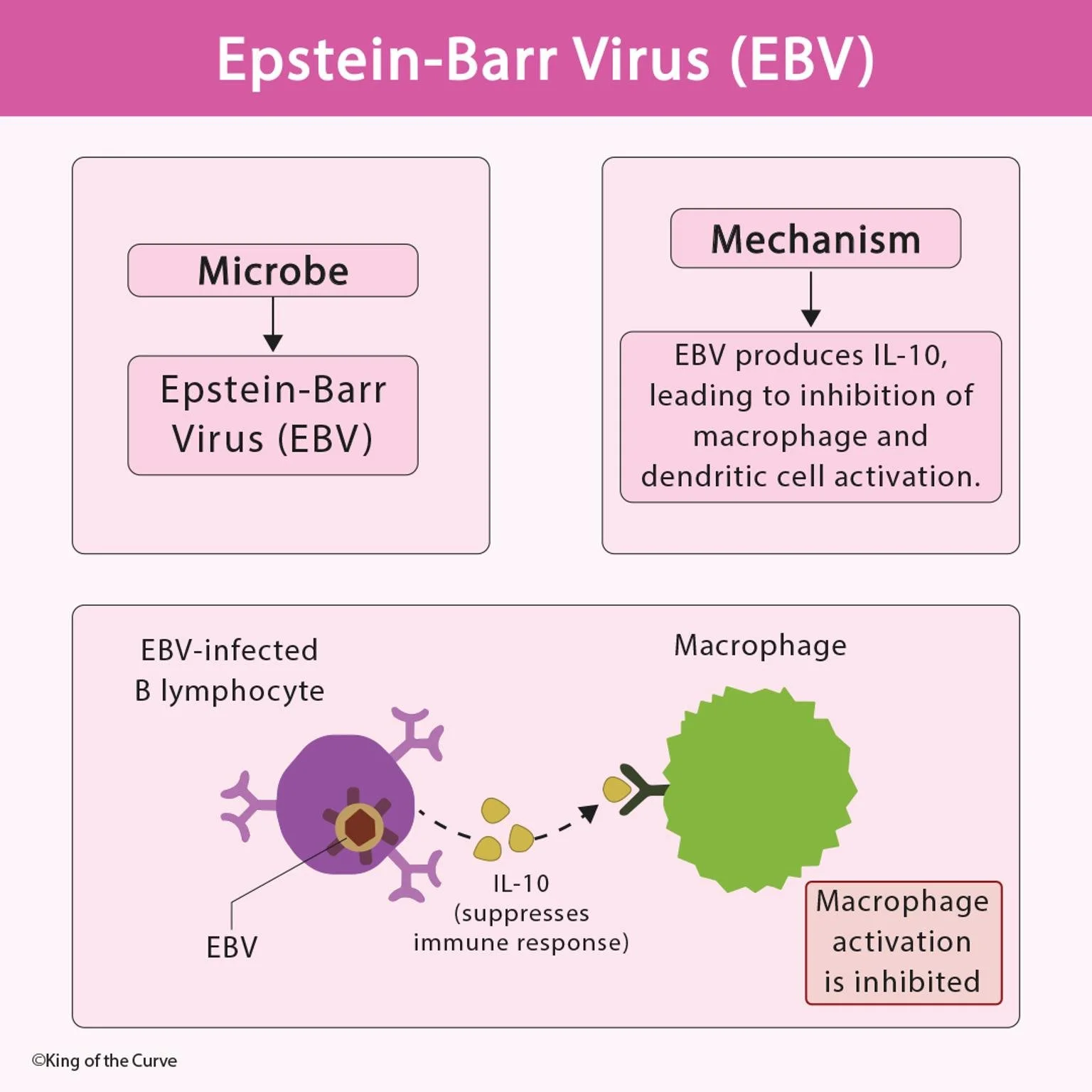
The image highlights a critical concept:
👉 EBV produces IL-10-like molecules
What does this do?
Suppresses macrophage activation
Inhibits dendritic cell function
Reduces immune response signaling
💡 Why this matters:
This allows EBV to persist in the body and avoid immune clearance.
🧬 Step-by-Step Mechanism
EBV infects a B lymphocyte
The infected cell begins producing IL-10
IL-10 suppresses immune cell activation
Macrophages and dendritic cells are inhibited
Virus persists → potential for chronic infection or malignancy
📊 Quick Summary Table
| Feature | Epstein-Barr Virus (EBV) |
|---|---|
| Virus Type | Herpesvirus (HHV-4) |
| Target Cells | B lymphocytes |
| Transmission | Saliva |
| Key Cytokine | IL-10 |
| Immune Effect | Suppresses macrophages & dendritic cells |
| Diseases | Mononucleosis, Burkitt lymphoma, Hodgkin lymphoma |
⚠️ Clinical Correlation (Highly Tested)
Infectious Mononucleosis:
Fever
Sore throat
Lymphadenopathy
Fatigue
Lab Findings:
Atypical lymphocytes
Positive Monospot test
💡 Exam Trick:
EBV causes reactive CD8+ T cells, even though it infects B cells.
🧪 Why IL-10 is High-Yield
IL-10 is an anti-inflammatory cytokine, and EBV mimics it to:
Decrease immune surveillance
Prevent antigen presentation
Promote viral survival
👉 This is a classic example of immune evasion, a favorite MCAT topic.
🏁 Conclusion
EBV is more than just a virus it’s a master of immune evasion. By understanding how it uses IL-10 to suppress immune responses, you gain a powerful framework for answering both microbiology and immunology questions.

Frequently Asked Questions (FAQs)
-
Aim for 4-6 focused hours, ensuring you incorporate breaks to avoid burnout.
-
Practice mindfulness techniques, take practice exams under realistic conditions, and maintain a balanced lifestyle.
-
Set short-term goals, seek support from mentors, and reward yourself for small achievements.
-
Regular exercise improves focus, reduces stress, and enhances overall mental clarity.
-
KOTC offers personalized learning tools, gamification features, and adaptive question banks to help students stay on track without burnout.