
🧬 Embryological Development of the Pancreas
The embryological development of the pancreas is a classic integration topic tested on the MCAT, NCLEX, and USMLE, especially through clinical scenarios like pancreas divisum or pancreatitis. What makes this topic tricky is not the memorization—but understanding the rotation and fusion of pancreatic buds. Today, we’ll simplify this concept using a visual-first approach so you can recognize it instantly on exam day.
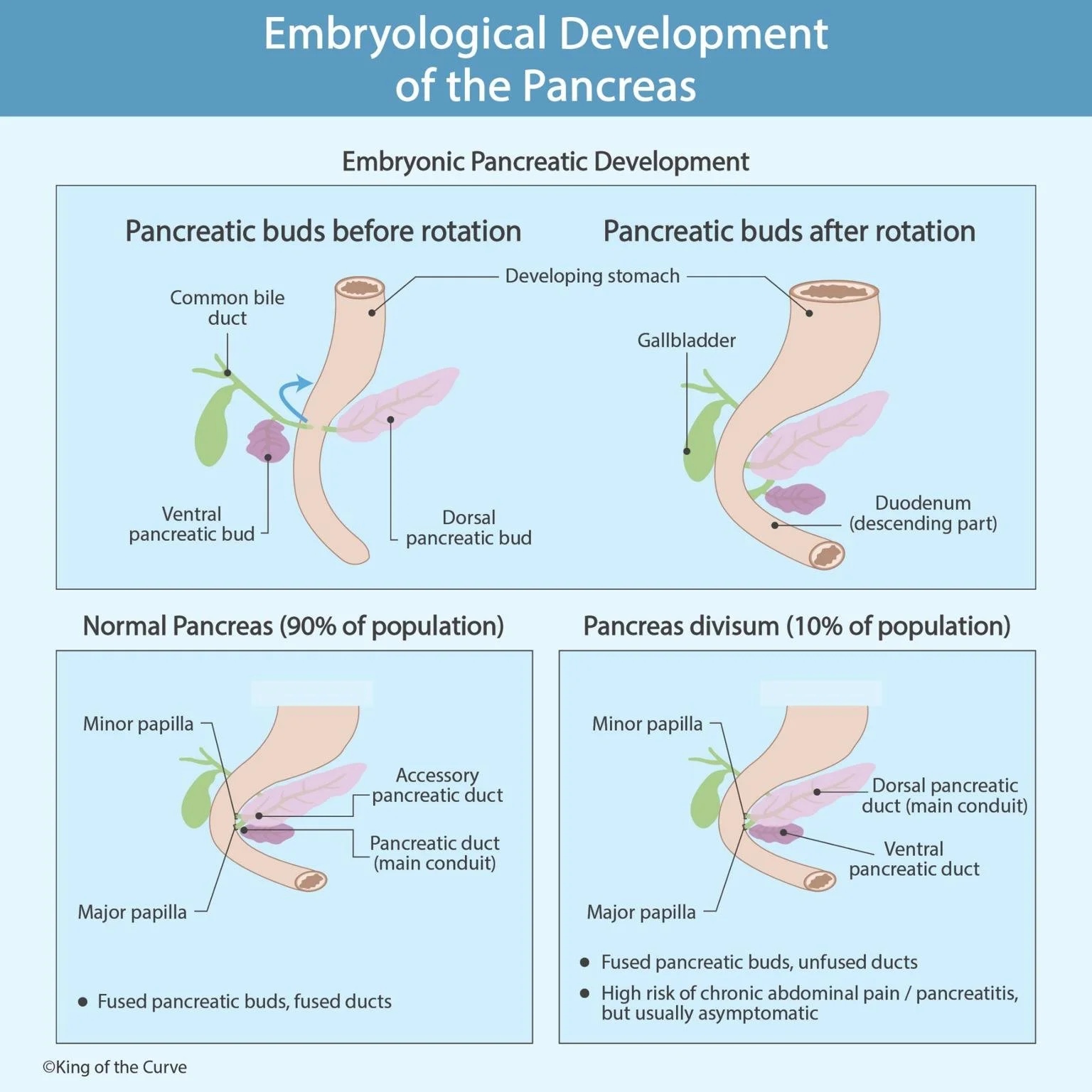
🧠 Big Picture Concept
Pancreatic development revolves around two key structures:
Dorsal pancreatic bud (larger, forms most of pancreas)
Ventral pancreatic bud (smaller, rotates and fuses)
The key idea:
👉 Rotation + fusion = normal pancreas
👉 Failure of fusion = pancreas divisum
🔄 Before vs After Rotation
Initially, the ventral bud sits near the bile duct, while the dorsal bud lies opposite it. As development progresses, the duodenum rotates, carrying the ventral bud posteriorly. Eventually, the two buds meet and fuse into a single organ.
💡 Exam Insight:
If a question mentions abnormal rotation or duct issues, immediately think about ventral bud movement.
🧩 What Each Bud Forms
Understanding what each bud contributes is high-yield:
Dorsal bud → body, tail, part of head
Ventral bud → inferior head + uncinate process
👉 This is often tested in anatomy-based MCAT passages.
📊 Normal vs Pancreas Divisum
| Feature | Normal Pancreas | Pancreas Divisum |
|---|---|---|
| Bud Fusion | Yes | No |
| Main Drainage | Major papilla | Minor papilla |
| Duct System | Fused ducts | Separate ducts |
| Clinical Risk | Low | Increased pancreatitis risk |
⚠️ Clinical Correlation: Pancreas Divisum
In about 10% of the population, the pancreatic ducts fail to fuse.
What happens?
Drainage occurs through the minor papilla
Can cause backflow and inflammation
Leads to recurrent pancreatitis
💡 MCAT/NCLEX Tip:
If a patient has chronic abdominal pain with no obvious cause, pancreas divisum may be the answer.
🔬 Why This Matters for Exams
This topic shows up in multiple ways:
Anatomy-based questions (what forms the uncinate process?)
Clinical passages (pancreatitis without gallstones)
Developmental errors (failure of fusion)
Quick Recognition Strategy
Rotation issue → think ventral bud
Duct issue → think fusion problem
Pain + normal imaging → think pancreas divisum
🚀 Conclusion
The embryological development of the pancreas becomes simple when you focus on one core idea: two buds, one rotation, and one fusion event. Master that, and you’ll be able to answer nearly any exam question on this topic.

Frequently Asked Questions (FAQs)
-
Aim for 4-6 focused hours, ensuring you incorporate breaks to avoid burnout.
-
Practice mindfulness techniques, take practice exams under realistic conditions, and maintain a balanced lifestyle.
-
Set short-term goals, seek support from mentors, and reward yourself for small achievements.
-
Regular exercise improves focus, reduces stress, and enhances overall mental clarity.
-
KOTC offers personalized learning tools, gamification features, and adaptive question banks to help students stay on track without burnout.