
🚰 Collecting Tubule Cell Function Explained: ADH, Aldosterone, and Diuretics
The kidney is one of the most high-yield organ systems on the MCAT and NCLEX because it combines physiology, hormones, and acid–base regulation in one place. One of the most important nephron regions to understand is the collecting tubule, where the body makes its final decisions about water retention, sodium balance, potassium secretion, and pH control.
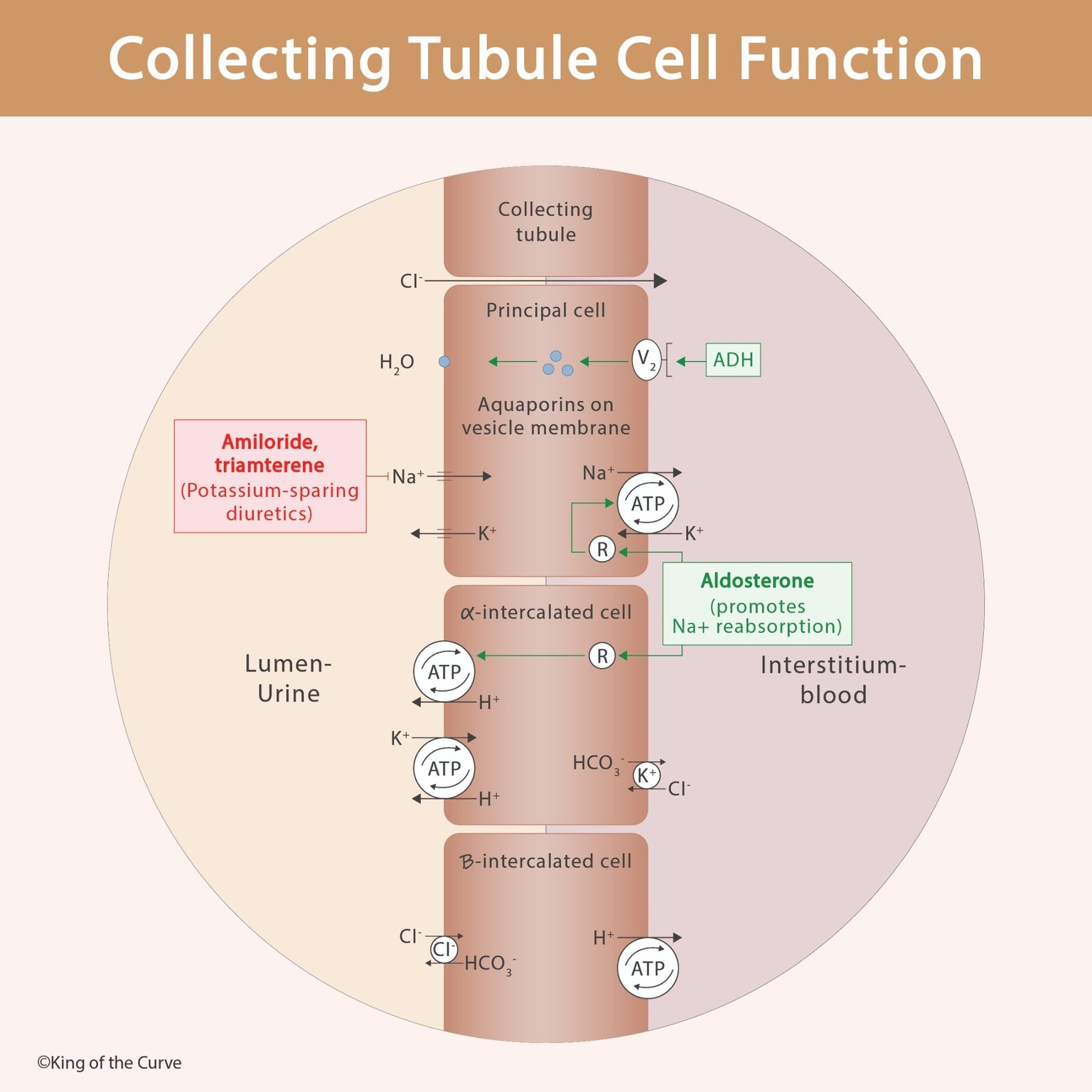
🧠 Why the Collecting Duct Is So Testable
The collecting tubule is the final checkpoint before urine leaves the nephron. That means it controls:
Final urine concentration
Blood pressure regulation
Electrolyte balance (Na⁺, K⁺, Cl⁻)
Acid–base homeostasis
On the MCAT, passages often connect this region to dehydration, SIADH, diuretics, or hyperaldosteronism. On the NCLEX, it appears in fluid imbalance and hypertension medication questions.
💧 Principal Cells: Sodium Reabsorption + Water Control
Principal cells are the main regulators of sodium and water balance in the collecting duct. They reabsorb Na⁺ from the urine and secrete K⁺ into the lumen.
Key transport actions include:
Na⁺ reabsorption through ENaC channels
K⁺ secretion into urine
Water reabsorption when aquaporins are inserted
These cells are strongly influenced by aldosterone and ADH.
🌊 ADH (Vasopressin): Concentrating the Urine
Antidiuretic hormone (ADH) binds to the V2 receptor on principal cells. This triggers insertion of aquaporin water channels into the membrane.
Result:
Water moves from urine → blood
Urine becomes concentrated
Blood volume increases
MCAT Tip:
High ADH = high water reabsorption = low urine output.
🧂 Aldosterone: Sodium Retention and Potassium Loss
Aldosterone acts on principal cells to increase:
Na⁺ reabsorption
K⁺ secretion
This hormone helps raise blood pressure by retaining sodium (and therefore water).
Clinical connections:
Hyperaldosteronism → hypertension + hypokalemia
Addison disease → low aldosterone → hyperkalemia + hypotension
High-Yield Rule:
Aldosterone saves Na⁺ but costs K⁺.
⚡ Potassium-Sparing Diuretics: Amiloride and Triamterene
This diagram highlights amiloride and triamterene, which block ENaC sodium channels in principal cells.
Effects:
↓ Na⁺ reabsorption
↓ K⁺ secretion
Prevents hypokalemia
These are commonly tested in both pharmacology and renal physiology questions.
🧪 Intercalated Cells: Acid–Base Regulation
The collecting tubule also contains intercalated cells, which manage blood pH:
α-Intercalated Cells
Secrete H⁺ into urine
Reabsorb HCO₃⁻ into blood
Important in acidosis correction
β-Intercalated Cells
Secrete HCO₃⁻ into urine
Reabsorb H⁺
Important in alkalosis correction
MCAT Shortcut:
α cells = acid secretion
β cells = base secretion
📊 Quick Summary Table (High-Yield Review)
| Cell Type | Hormone Target | Main Function | Key Exam Connection |
|---|---|---|---|
| Principal Cell | ADH (V2) | Water reabsorption via aquaporins | Urine concentration |
| Principal Cell | Aldosterone | Na⁺ reabsorption, K⁺ secretion | BP + hypokalemia |
| α-Intercalated Cell | None | H⁺ secretion, HCO₃⁻ reabsorption | Acidosis correction |
| β-Intercalated Cell | None | HCO₃⁻ secretion, H⁺ reabsorption | Alkalosis correction |
| ENaC Blockers | Amiloride / Triamterene | Potassium-sparing diuresis | Prevent hypokalemia |
🧪 MCAT & NCLEX Tip: How This Appears in Questions
Instead of asking directly about aquaporins, exams may describe:
A dehydrated patient with high ADH
A hypertensive patient with low potassium
A diuretic that prevents K⁺ loss
Metabolic acidosis requiring H⁺ secretion
Knowing the collecting tubule mechanisms makes these questions much easier.
🚀 Call to Action
If renal physiology feels complicated, the collecting tubule is the perfect place to start — because hormones like ADH and aldosterone show up everywhere on exams.

Frequently Asked Questions (FAQs)
-
Aim for 4-6 focused hours, ensuring you incorporate breaks to avoid burnout.
-
Practice mindfulness techniques, take practice exams under realistic conditions, and maintain a balanced lifestyle.
-
Set short-term goals, seek support from mentors, and reward yourself for small achievements.
-
Regular exercise improves focus, reduces stress, and enhances overall mental clarity.
-
KOTC offers personalized learning tools, gamification features, and adaptive question banks to help students stay on track without burnout.