
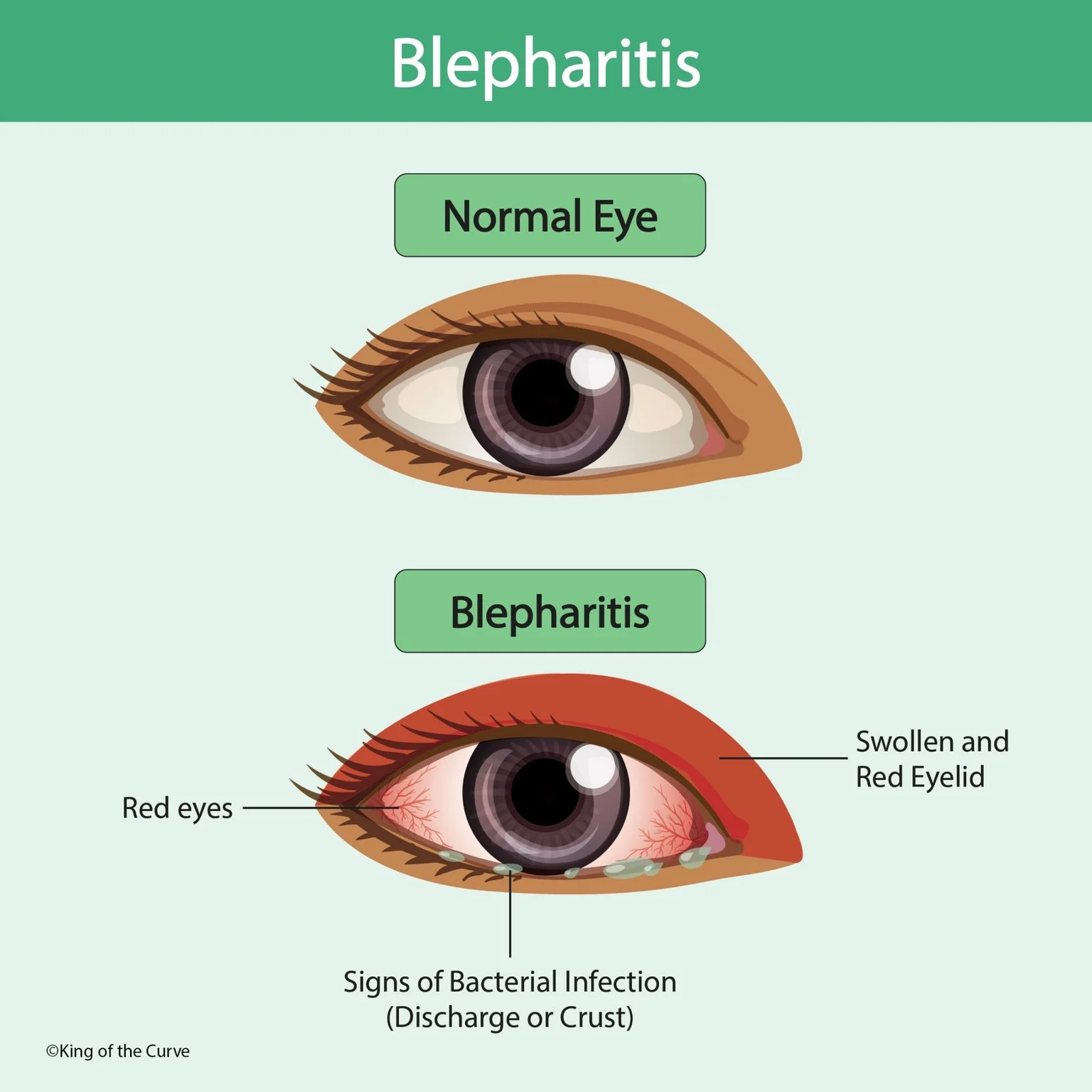
Blepharitis is inflammation of the eyelid margins, where the eyelashes grow. It commonly causes redness, swelling, itching, and crusting around the lashes. The condition can affect both eyes and often follows a recurring course. Symptoms may improve with care and return when inflammation or gland dysfunction persists.
👁️ What Causes Blepharitis?
Blepharitis can involve bacterial overgrowth, blocked eyelid oil glands, seborrheic dermatitis, rosacea, or Demodex mites. More than one factor may contribute at the same time.
Bacteria normally live on the skin without causing problems. In some people, bacterial activity and the resulting inflammatory response contribute to eyelid irritation.
Crusting does not automatically mean a bacterial infection is present. Flaky skin, gland secretions, and other debris can produce a similar appearance.
🔍 Anterior and Posterior Blepharitis
Anterior blepharitis affects the outer eyelid margin, particularly around the eyelash bases. It may be associated with bacteria, seborrheic dermatitis, or Demodex mites.
Posterior blepharitis affects the inner eyelid margin and commonly involves the meibomian glands. These glands produce oil that helps stabilize the tear film and slow tear evaporation.
Both types can occur together. Their features may overlap, making examination important when symptoms persist.
💧 How Blepharitis Affects Tears
A healthy tear film keeps the eye surface lubricated and comfortable. When meibomian gland secretions become abnormal, tears can evaporate too quickly.
This may cause dryness, burning, or a gritty sensation. Irritation can also trigger reflex tearing, so a person may experience watery eyes despite an unstable tear film.
📊 Common Signs and Symptoms
| Feature | Typical Finding | Important Detail |
|---|---|---|
| Eyelid redness | Inflamed eyelid margins | May occur with swelling and tenderness |
| Eyelash crusting | Flakes or debris around lash bases | Does not necessarily indicate bacterial infection |
| Irritation | Itching, burning, or grittiness | May be more noticeable on waking |
| Tear disturbance | Dryness or excessive watering | Can accompany meibomian gland dysfunction |
| Sticky eyelids | Lids stick together after sleep | Often associated with accumulated crusts |
Symptoms vary in severity. Some people notice mild flakes around the lashes, while others experience persistent discomfort and visible inflammation.
🩺 How Is Blepharitis Diagnosed?
An eye professional examines the eyelid margins, eyelashes, oil gland openings, and eye surface. They may also assess tear quality and look for associated skin conditions.
This examination helps distinguish blepharitis from other causes of red or irritated eyes. The appearance of the lashes and gland openings can help identify the contributing factors.
🧼 Managing Blepharitis
Warm compresses and gentle eyelid cleaning are common parts of management. A clean, comfortably warm compress can loosen crusts and soften thickened gland secretions.
Cleaning should be gentle, using an appropriate eyelid cleanser or a method recommended by an eye professional. Forceful rubbing or picking at crusts can worsen irritation.
Artificial tears may help associated dryness. Antibiotics, anti-inflammatory medicines, or treatments directed at mites are used selectively according to the underlying cause.
🔄 Why Ongoing Care Matters
Blepharitis often requires continued care because symptoms can return. Maintaining an eyelid-cleaning routine may help reduce debris and keep inflammation under control.
Managing associated rosacea or seborrheic dermatitis can also help. During a flare, avoiding contact lenses and eye makeup may reduce irritation and make eyelid hygiene easier.
⚠️ Possible Complications
Blepharitis can be associated with recurrent styes, chalazia, dry eye, and changes in eyelash growth. More severe inflammation can sometimes affect the cornea.
Eye pain, reduced vision, marked redness, or significant light sensitivity warrants prompt assessment. These findings should not be assumed to result from uncomplicated blepharitis.

Frequently Asked Questions (FAQs)
-
Aim for 4-6 focused hours, ensuring you incorporate breaks to avoid burnout.
-
Practice mindfulness techniques, take practice exams under realistic conditions, and maintain a balanced lifestyle.
-
Set short-term goals, seek support from mentors, and reward yourself for small achievements.
-
Regular exercise improves focus, reduces stress, and enhances overall mental clarity.
-
KOTC offers personalized learning tools, gamification features, and adaptive question banks to help students stay on track without burnout.