
🧬 Trypsinogen Activation Pathway: A High-Yield Guide to Protein Digestion
Many pancreatic digestive enzymes are produced as inactive precursors called zymogens. This protects the pancreas from digesting its own proteins. After these precursors reach the small intestine, they can be activated and participate in protein digestion.
🔬 Trypsinogen: The Inactive Precursor
Trypsinogen is an inactive protease precursor secreted by pancreatic acinar cells. It travels through the pancreatic ducts into the duodenum. Keeping trypsin inactive until it reaches the intestinal lumen is an important protective mechanism against premature protein digestion.
⚡ Enteropeptidase Activates Trypsinogen
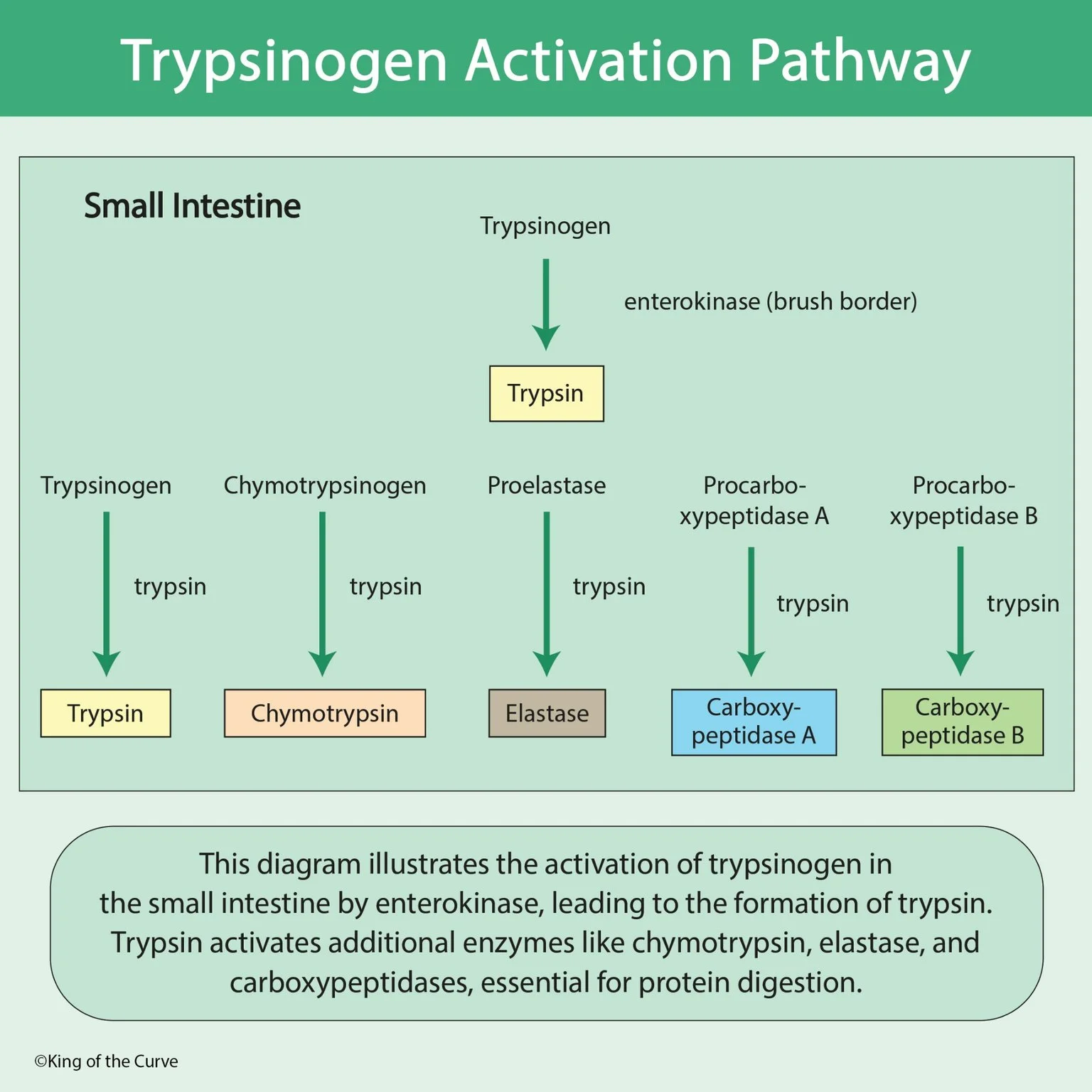
At the brush border of the duodenum, enteropeptidase—historically called enterokinase—converts trypsinogen into active trypsin. This is the key initiating step in the activation cascade of pancreatic proteases.
🔁 Trypsin Activates More Trypsin
Once some trypsin has formed, it can activate additional molecules of trypsinogen into trypsin. This creates an amplification process that rapidly increases proteolytic enzyme activity within the small intestine.
🧪 Trypsin Activates Other Zymogens
Trypsin also activates several other pancreatic enzyme precursors. Chymotrypsinogen becomes chymotrypsin, proelastase becomes elastase, and procarboxypeptidases become active carboxypeptidases. This makes trypsin a central regulator of pancreatic protease activation.
📊 Major Enzyme Activation Pathways
| 🧬 Inactive Zymogen | ⚡ Activator | 🧪 Active Enzyme | 🎯 Main Role |
|---|---|---|---|
| Trypsinogen | Enteropeptidase / trypsin | Trypsin | Protein digestion and activation of other zymogens |
| Chymotrypsinogen | Trypsin | Chymotrypsin | Cleaves peptide bonds within proteins |
| Proelastase | Trypsin | Elastase | Digests proteins, including elastin |
| Procarboxypeptidase A | Trypsin | Carboxypeptidase A | Removes C-terminal amino acids |
| Procarboxypeptidase B | Trypsin | Carboxypeptidase B | Removes C-terminal basic amino acids |
✂️ Endopeptidases vs Exopeptidases
Trypsin, chymotrypsin, and elastase are endopeptidases, meaning they cleave peptide bonds within a polypeptide chain. Carboxypeptidases are exopeptidases that remove amino acids from the C-terminal end of peptides. This distinction is useful for understanding how proteins are progressively broken down.
🩺 Why Premature Activation Matters
The location of enzyme activation is physiologically important. If trypsinogen becomes activated prematurely within the pancreas, trypsin can begin activating other digestive enzymes before they reach the intestine. This inappropriate activation is an important mechanism associated with pancreatic tissue injury and acute pancreatitis.
🎯 MCAT High-Yield Takeaway
Remember the sequence: pancreas secretes trypsinogen → enteropeptidase activates trypsin → trypsin activates more trypsinogen and other pancreatic zymogens. For MCAT questions, connect zymogen secretion with protection against autodigestion and recognize trypsin as the central enzyme in the pancreatic protease activation cascade.

Frequently Asked Questions (FAQs)
-
Aim for 4-6 focused hours, ensuring you incorporate breaks to avoid burnout.
-
Practice mindfulness techniques, take practice exams under realistic conditions, and maintain a balanced lifestyle.
-
Set short-term goals, seek support from mentors, and reward yourself for small achievements.
-
Regular exercise improves focus, reduces stress, and enhances overall mental clarity.
-
KOTC offers personalized learning tools, gamification features, and adaptive question banks to help students stay on track without burnout.