
The pancreas supports digestion through its exocrine tissue and regulates metabolism through its endocrine tissue. Acinar cells release digestive enzymes into ducts that carry pancreatic secretions toward the small intestine. Meanwhile, the pancreatic islets release hormones, including insulin and glucagon, directly into the bloodstream.
🌱 How the Pancreatic Buds Develop
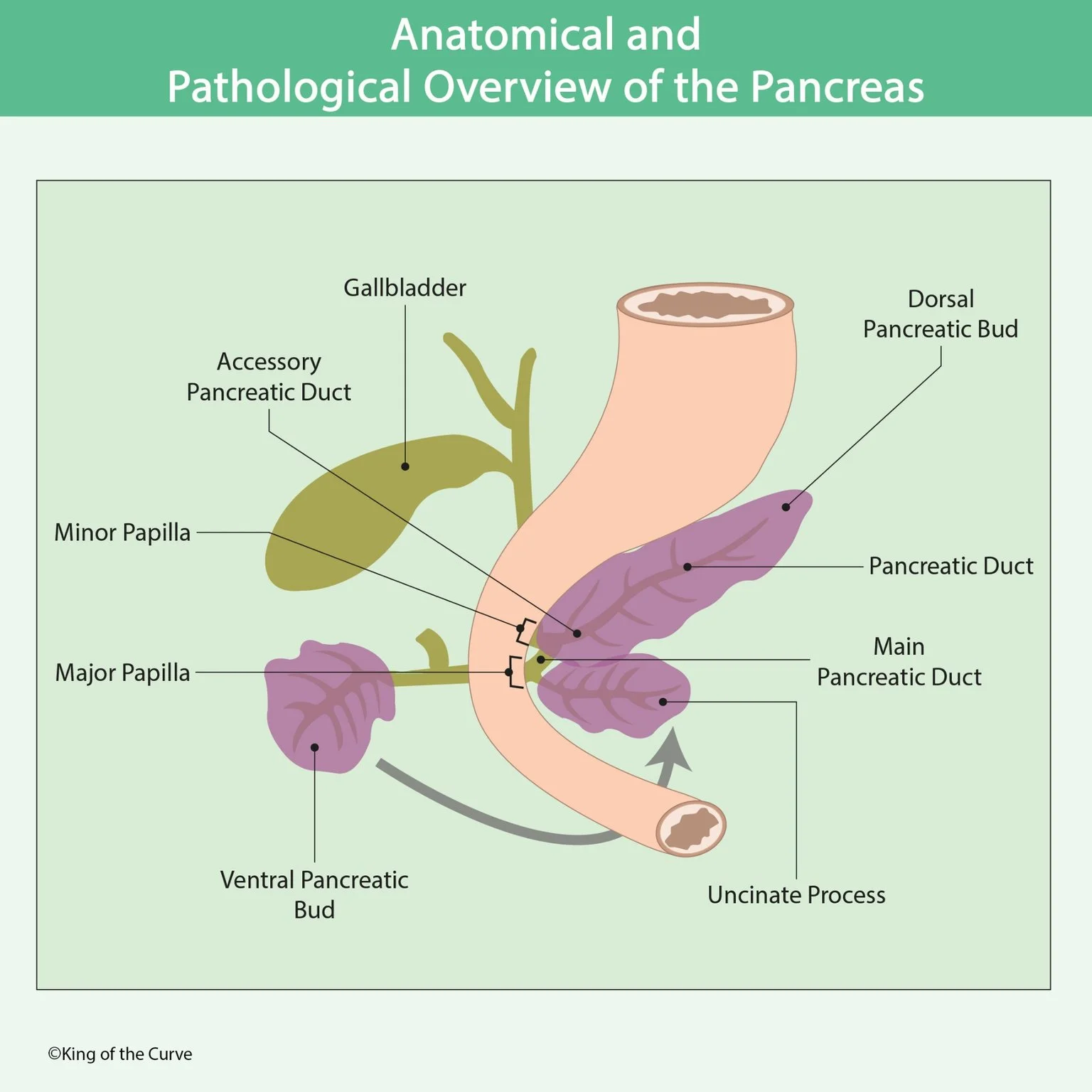
The pancreas develops from two outgrowths of the embryonic foregut called the dorsal and ventral pancreatic buds. Each initially has its own duct system. As the duodenum changes position during development, the ventral bud moves around it toward the dorsal bud, allowing the pancreatic tissues and their ducts to unite.
🧩 What the Dorsal Pancreatic Bud Forms
The dorsal pancreatic bud forms most of the pancreas, including the upper portion of the head, the neck, body, and tail. Its duct also contributes substantially to the mature pancreatic drainage system. Understanding this contribution helps explain why the dorsal pancreas remains the dominant drainage territory when normal duct fusion does not occur.
🔄 What the Ventral Pancreatic Bud Forms
The ventral pancreatic bud develops near the bile duct and moves behind the duodenum before joining the dorsal pancreas. It forms the uncinate process and the lower portion of the pancreatic head. Its close developmental relationship with the biliary system helps explain the connection between the main pancreatic duct and the common bile duct.
📊 Key Pancreatic Structures and Their Roles
Pancreatic anatomy becomes easier to follow when the developing buds are connected with their adult derivatives and drainage openings. The main pancreatic duct normally carries most pancreatic secretions toward the major duodenal papilla. An accessory duct, when present and patent, provides an additional route through the minor papilla.
| Structure | Main Anatomical or Developmental Role | Key Relationship |
|---|---|---|
| Dorsal pancreatic bud | Forms most of the head, neck, body, and tail | Its duct contributes to the main and accessory ducts |
| Ventral pancreatic bud | Forms the uncinate process and lower pancreatic head | Develops close to the bile duct |
| Main pancreatic duct | Carries most pancreatic secretions | Usually drains at the major duodenal papilla |
| Accessory pancreatic duct | Provides an additional drainage route when patent | Opens at the minor duodenal papilla |
| Major duodenal papilla | Opening on the descending duodenum | Receives pancreatic and biliary drainage |
| Minor duodenal papilla | Smaller opening above the major papilla | Receives accessory pancreatic duct drainage |
🚰 How the Main and Accessory Ducts Form
The main pancreatic duct, also called the duct of Wirsung, usually forms from the ventral duct and the portion of the dorsal duct draining the body and tail. The remaining duodenal segment of the dorsal duct may persist as the accessory duct of Santorini. These connections direct pancreatic secretions into the duodenum.
📍 Why the Major and Minor Papillae Matter
The major and minor duodenal papillae are separate openings in the descending part of the duodenum. The main pancreatic duct usually joins the common bile duct before opening at the major papilla, although anatomical variations occur. The accessory pancreatic duct opens at the minor papilla, which lies above the major papilla.
⚠️ What Happens in Pancreas Divisum?
Pancreas divisum occurs when the dorsal and ventral pancreatic duct systems fail to fuse normally. Most pancreatic secretions then drain through the dorsal duct and minor papilla rather than the usual dominant route through the major papilla. Most people with this variation have no symptoms, although it may contribute to recurrent pancreatitis in some individuals.
🩺 How Annular Pancreas Can Affect the Duodenum
Annular pancreas is a developmental abnormality in which pancreatic tissue partially or completely surrounds the duodenum. It is associated with abnormal development and positioning of the ventral pancreatic tissue. The surrounding tissue can narrow the intestinal passage and cause obstruction, although some people remain asymptomatic until later in life.

Frequently Asked Questions (FAQs)
-
Aim for 4-6 focused hours, ensuring you incorporate breaks to avoid burnout.
-
Practice mindfulness techniques, take practice exams under realistic conditions, and maintain a balanced lifestyle.
-
Set short-term goals, seek support from mentors, and reward yourself for small achievements.
-
Regular exercise improves focus, reduces stress, and enhances overall mental clarity.
-
KOTC offers personalized learning tools, gamification features, and adaptive question banks to help students stay on track without burnout.