
⚖️ Types of Sanctions: Formal vs. Informal
In sociology, sanctions are rewards or punishments used to encourage conformity to social norms. They help regulate behavior by signaling which actions a society or group approves or disapproves of. For the MCAT, sanctions are commonly classified along two dimensions: formal vs. informal and positive vs. negative.
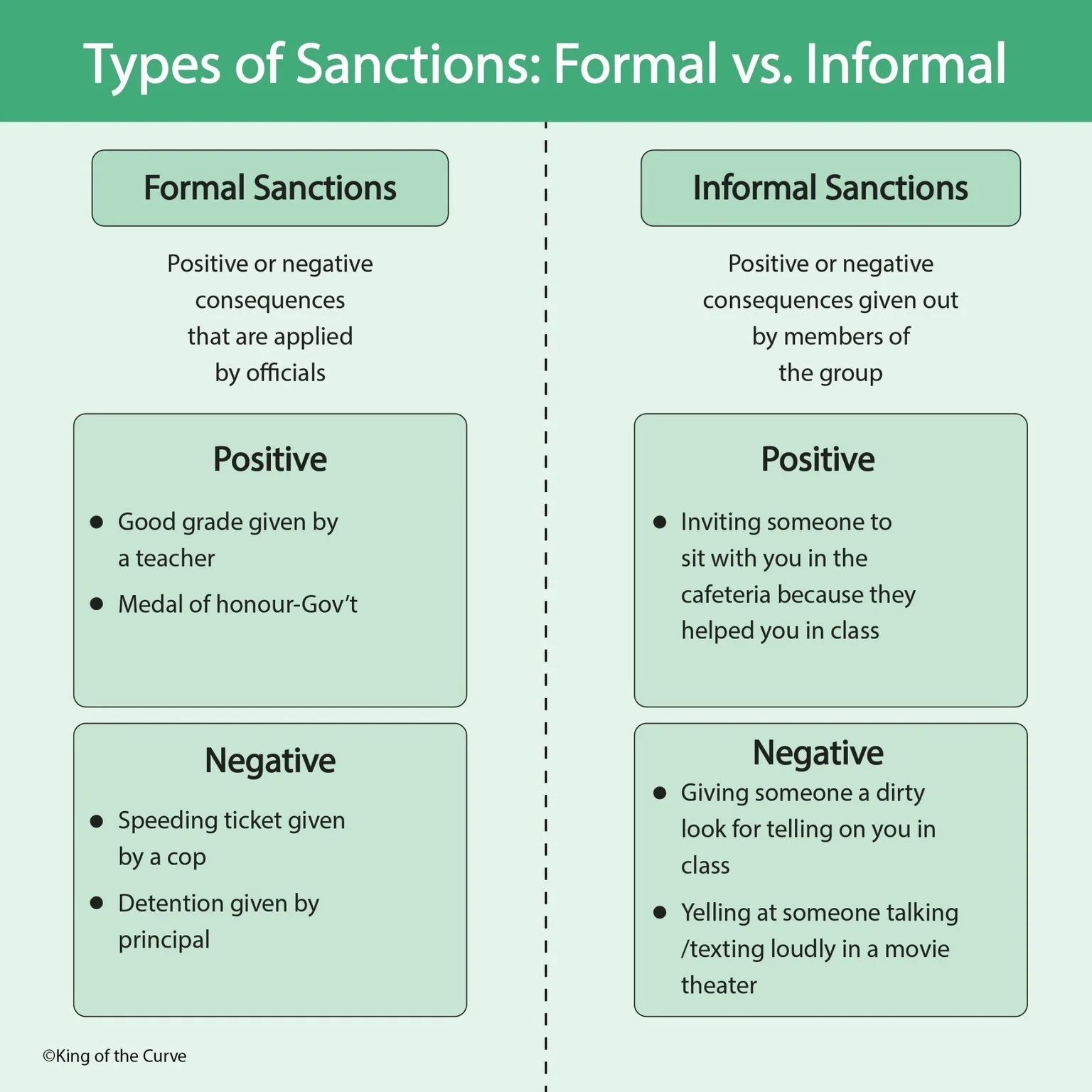
🏛️ What Are Formal Sanctions?
Formal sanctions are officially recognized consequences imposed by institutions or people with established authority. Governments, schools, workplaces, courts, and other organizations can administer them according to written rules, policies, or laws. Formal sanctions may be either positive or negative.
🏅 Positive Formal Sanctions
A positive formal sanction is an official reward for desirable behavior or achievement. Examples include receiving an academic award, earning a professional promotion, receiving a scholarship, or being awarded a government honor. These rewards reinforce behavior that an institution considers desirable.
🚨 Negative Formal Sanctions
A negative formal sanction is an official penalty imposed for violating a rule or expectation. A speeding ticket, school detention, workplace disciplinary action, or legal fine can all function as negative formal sanctions. The defining feature is that an authorized institution formally imposes the consequence.
👥 What Are Informal Sanctions?
Informal sanctions arise through everyday social interactions rather than through official rules or institutions. Friends, family members, classmates, coworkers, and other members of a social group can reinforce or discourage behavior through their reactions.
😊 Positive Informal Sanctions
A positive informal sanction communicates social approval. Compliments, smiles, praise, invitations, applause, or expressions of acceptance can reward behavior without involving an official institution. For example, classmates inviting someone to join them after that person was helpful is a positive informal sanction.
😠 Negative Informal Sanctions
A negative informal sanction expresses social disapproval. Examples include criticism, dirty looks, ridicule, exclusion, or verbal disapproval. Someone receiving an annoyed look for violating an unwritten social expectation illustrates how groups can regulate behavior without formal punishment.
📊 Formal vs. Informal Sanctions
| 📊 Feature | 🏛️ Formal Sanctions | 👥 Informal Sanctions |
|---|---|---|
| Source | Institutions or authorities | Individuals or social groups |
| Rules | Usually based on established rules | Usually based on social norms |
| Positive example | Award or scholarship | Praise or social acceptance |
| Negative example | Fine or detention | Criticism or dirty look |
| Purpose | Encourage conformity | Encourage conformity |
🎯 MCAT High-Yield Takeaway
For MCAT Psychology and Sociology, remember that formal vs. informal describes the source of the sanction, while positive vs. negative describes whether the consequence rewards or discourages behavior. A formal sanction comes through an established institution or authority; an informal sanction develops through everyday social interaction.

Frequently Asked Questions (FAQs)
-
Aim for 4-6 focused hours, ensuring you incorporate breaks to avoid burnout.
-
Practice mindfulness techniques, take practice exams under realistic conditions, and maintain a balanced lifestyle.
-
Set short-term goals, seek support from mentors, and reward yourself for small achievements.
-
Regular exercise improves focus, reduces stress, and enhances overall mental clarity.
-
KOTC offers personalized learning tools, gamification features, and adaptive question banks to help students stay on track without burnout.